

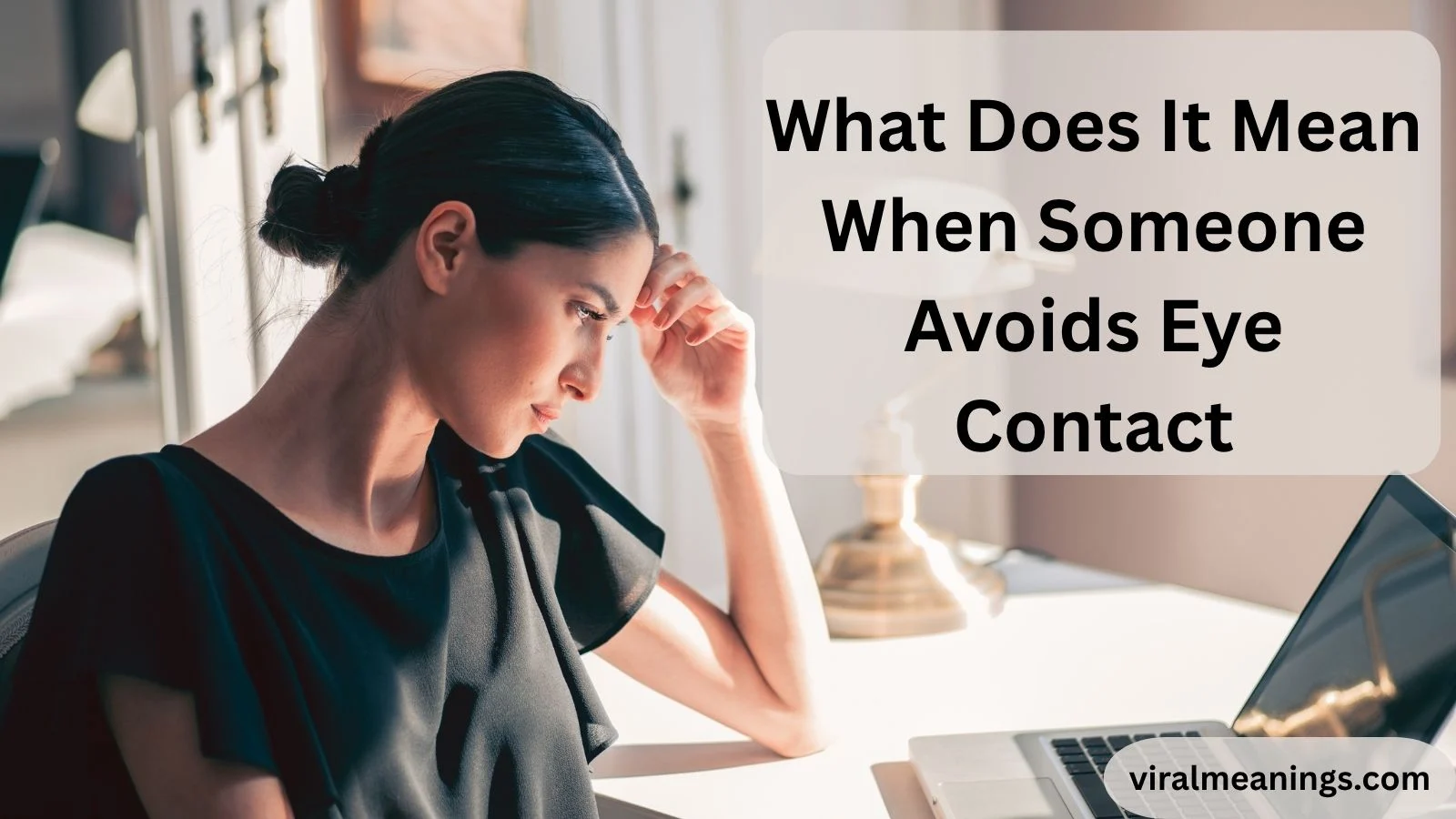
What does it mean when someone avoids eye contact? It can feel confusing when someone looks away while talking to you, avoids meeting your gaze, or seems uncomfortable making direct eye contact. You might wonder whether they are shy, nervous, hiding something, or simply not interested in the conversation.
The truth is that avoiding eye contact can have several meanings, and the situation matters more than the gesture alone. Some people look away because they feel anxious or self-conscious, while others find direct eye contact uncomfortable or distracting. In certain situations, it may reflect emotional discomfort, cultural expectations, or a personal communication style.
If you have noticed this behavior in a friend, a romantic interest, a coworker, or someone you recently met, understanding the possible reasons can help you avoid jumping to conclusions. Let’s explore what avoiding eye contact might mean and how to interpret it more thoughtfully.
1. What Does It Mean When Someone Avoids Eye Contact?
Avoiding eye contact means a person frequently looks away, lowers their gaze, or does not look directly into another person’s eyes during a conversation. It is a form of nonverbal communication, meaning communication expressed through behavior rather than spoken words.
However, it does not have one universal meaning. The same behavior can reflect different emotions depending on the person, their environment, and the conversation.
For example, someone might avoid eye contact because they feel nervous around a person they like. Another person might look away because they are concentrating on what they want to say. Someone else may simply feel more comfortable listening without maintaining direct eye contact.
Here are seven common reasons someone might avoid eye contact:
- Shyness: They feel self-conscious when interacting with others.
- Social anxiety: Direct eye contact makes them feel nervous or overly observed.
- Attraction: They feel awkward around someone they find attractive.
- Discomfort: The conversation or situation makes them uneasy.
- Concentration: They look away to organize their thoughts or process information.
- Cultural or personal preferences: Their communication style may involve less direct eye contact.
- Emotional overwhelm: They are dealing with strong feelings and need a little space.
These possibilities are not diagnoses or guaranteed explanations. To understand someone’s behavior, consider how they act in different situations and whether anything else has changed.
Is avoiding eye contact always a bad sign?
No. Avoiding eye contact does not automatically mean someone dislikes you, feels guilty, or wants to end a relationship.
Some people are naturally less comfortable with direct eye contact, even when they feel relaxed and interested. Others maintain eye contact only briefly because prolonged staring feels intense.
Instead of treating eye contact as a test of honesty or affection, pay attention to the person’s overall behavior. Their words, tone, actions, and willingness to communicate usually provide more useful information.
2. Seven Common Reasons Someone Avoids Eye Contact
The most helpful way to interpret this behavior is to consider the situation in which it happens. Here are seven possibilities and examples of how each might appear in everyday life.
1. They Feel Shy or Self-Conscious
Shyness is one possible reason someone avoids looking directly into another person’s eyes. They may worry about making a good impression, saying something embarrassing, or appearing awkward.
For instance, imagine meeting someone at a social event. They answer your questions, smile occasionally, and seem interested in talking, but they keep looking down or to the side.
This behavior could reflect shyness rather than disinterest. The person may want to connect with you but feel uncomfortable being the center of attention.
Look for other clues, such as quiet speech, hesitant answers, or gradually becoming more relaxed as the conversation continues. Even then, remember that quietness alone does not establish why someone behaves this way.
2. They Feel Nervous or Anxious
Anxiety can make ordinary social interactions feel stressful. For some people, direct eye contact increases that discomfort because they feel exposed or worry that others are judging them.
Someone experiencing social anxiety might avoid eye contact with strangers, coworkers, classmates, or even close friends. Their behavior may become more noticeable during interviews, public speaking, or emotionally difficult conversations.
For example, a coworker might look at their notes instead of your face while explaining a project. That does not necessarily mean they dislike you or have something to hide.
If nervousness seems possible, try making the interaction more comfortable. Speak calmly, avoid putting them on the spot, and allow them time to respond without demanding constant eye contact.
3. They Are Attracted to You
Sometimes, avoiding eye contact can happen when someone feels attracted to another person. They may become unusually aware of their appearance, facial expressions, or how they come across.
Imagine someone who chats comfortably with everyone else but suddenly looks away when you catch their gaze. They might smile, glance at you again, or seem a little nervous when you speak.
Attraction is one possible explanation, but it is not the only one. A person might avoid eye contact because they are shy, distracted, uncomfortable, or simply not accustomed to direct eye contact.
Look at the broader pattern instead. Do they initiate conversations, remember details about you, make time to spend with you, or show consistent interest in getting to know you?
Those behaviors can provide more meaningful clues than eye contact alone. Even a combination of signals cannot confirm romantic feelings without clearer communication.
4. They Feel Uncomfortable With the Conversation
People sometimes look away when a subject becomes personal, embarrassing, tense, or emotionally difficult.
For example, you might ask a friend about a disagreement, and they suddenly stop looking at you. They could be feeling upset, unsure how to explain themselves, or worried about making the situation worse.
In this case, avoiding eye contact may reflect discomfort with the conversation rather than a negative opinion of you.
Consider what happened immediately before the behavior changed. Did you bring up a sensitive topic? Did the conversation become confrontational? Did the person receive upsetting news?
The timing may help you understand the situation. However, looking away alone cannot tell you exactly what someone feels or whether they are being truthful.
5. They Are Concentrating or Thinking
Not every instance of avoiding eye contact has an emotional explanation. Some people naturally look away when they are trying to remember information, solve a problem, or explain a complicated idea.
For example, a student answering a difficult question might look toward the ceiling while thinking. A friend describing an event might glance around while trying to remember what happened.
Looking away can help some people manage visual distractions while thinking. Others find that maintaining eye contact takes effort away from listening or organizing their words.
If the person continues responding thoughtfully and stays engaged in the conversation, there may be no problem at all.
6. They Have Different Cultural or Personal Communication Preferences
Eye contact is not interpreted the same way in every culture, family, or social environment. In some situations, direct eye contact communicates confidence and engagement. In others, prolonged eye contact may feel disrespectful, confrontational, or overly personal.
Personal preferences matter, too. Someone might be comfortable making eye contact with close friends but avoid it with strangers or people in positions of authority.
Neurodivergent people, including some autistic individuals and people with ADHD, may also experience eye contact differently. For some, it can feel uncomfortable or make listening and processing information more difficult.
This does not mean every person who avoids eye contact is neurodivergent. It simply means that eye contact is not a reliable measure of someone’s interest, respect, or understanding.
A better approach is to respect individual differences rather than expecting everyone to communicate in exactly the same way.
7. They Are Emotionally Overwhelmed
Strong emotions can sometimes make eye contact difficult. A person who feels embarrassed, sad, frustrated, or vulnerable might look away because the interaction feels intense.
Imagine a friend discussing a painful experience. They may struggle to look at you while explaining what happened, even though they trust you and appreciate your support.
Similarly, someone might avoid eye contact during an argument because they are trying to calm down before responding.
If the situation seems emotionally difficult, give the person room to speak at their own pace. You can show support through attentive listening and gentle questions rather than insisting that they look at you.
3. How to Understand Eye Contact in Different Situations
The context surrounding the behavior often matters more than the behavior itself. Consider the following examples to understand how the same gesture can have different explanations.
When Someone Avoids Eye Contact With You but Looks at Others
This difference might make you wonder whether the person dislikes you or feels awkward around you.
Several explanations are possible. They might feel nervous around you, be unsure how to interact with you, or have unresolved tension with you. If romantic interest is involved, attraction could also be a possibility.
However, the difference does not automatically mean you have done something wrong. Your relationship with the person, the setting, and the nature of your conversations all matter.
If you notice a consistent pattern, consider whether they still initiate conversations, respond warmly, and make an effort to spend time with you. These behaviors can help you assess the relationship more accurately.
When Someone Avoids Eye Contact While Talking
If someone looks away while speaking, they may be thinking carefully, feeling anxious, or struggling to express an emotion.
Pay attention to the conversation itself. Are they answering your questions? Do they explain their ideas clearly? Do they seem comfortable enough to continue?
A person can be fully engaged without maintaining constant eye contact. Listening carefully and responding appropriately are often better indicators of participation.
When Someone Avoids Eye Contact After an Argument
After a disagreement, reduced eye contact might reflect embarrassment, frustration, sadness, or a desire to avoid further conflict.
Rather than assuming they are angry or refusing to forgive you, allow some time for emotions to settle. When appropriate, ask whether they would like to talk about what happened.
A calm conversation can clarify the situation far better than trying to decode a single gesture.
When Someone Avoids Eye Contact and Acts Distant
Avoiding eye contact alongside other changes may suggest that something in the relationship deserves attention.
For example, the person might stop initiating conversations, give consistently short responses, cancel plans, or avoid spending time with you. These behaviors could indicate reduced interest, stress, unresolved conflict, or other personal concerns.
Even then, you cannot know the exact reason without more information. If the relationship matters to you, a respectful conversation is usually more useful than guessing.
4. Avoiding Eye Contact vs. Other Behaviors: What Is the Difference?
People often confuse avoiding eye contact with lying, ignoring someone, or showing disinterest. Although these behaviors can sometimes occur together, they are not interchangeable.
| Behavior | What it might indicate | What it does not prove |
|---|---|---|
| Avoiding eye contact | Shyness, concentration, discomfort, or personal preference | Dishonesty or rejection |
| Ignoring someone | Lack of engagement, distraction, or a deliberate decision not to respond | The exact reason for the behavior |
| Looking away briefly | Thinking, processing information, or shifting attention | Nervousness or attraction |
| Avoiding a conversation | Discomfort, limited time, conflict, or a desire for space | That the person dislikes you |
| Maintaining eye contact | Attention, confidence, or a communication habit | Honesty, attraction, or trustworthiness |
Does avoiding eye contact mean someone is lying?
Not necessarily. A common misconception is that people who lie avoid eye contact while honest people maintain it.
In reality, eye contact varies considerably between individuals. Someone who is nervous may look away while telling the truth, while someone who is dishonest may maintain eye contact.
It is more reasonable to evaluate the information available, ask clear questions, and look for relevant evidence than to judge honesty based on eye contact.
Does avoiding eye contact mean someone dislikes you?
No. A person might avoid your gaze because they feel shy, anxious, distracted, or uncomfortable in a particular situation.
If you are concerned about your relationship, consider their consistent behavior and how they communicate with you over time. A single gesture cannot establish how someone feels about you.
5. How Should You Respond When Someone Avoids Eye Contact?
When someone avoids eye contact, the best response is usually to stay calm, respect their comfort, and avoid making assumptions.
You do not need to correct their behavior or force them to look at you. Instead, focus on making the interaction comfortable and understanding what is happening.
Give them space. If they seem nervous or overwhelmed, avoid staring at them or repeatedly asking why they are looking away. Allow them to participate in the conversation in a way that feels natural.
Pay attention to their other signals. Consider their words, tone, facial expressions, and actions. Do they answer your questions? Do they seem interested in continuing the conversation? Are they respectful toward you?
No single clue tells the whole story, but the overall pattern can provide useful context.
Ask gently if something seems wrong. If someone you know well suddenly changes their behavior, you can check in without accusing them.
For example, you might say, “You seem a little quiet today. Is everything okay?”
This question leaves room for an honest answer without suggesting that they have done anything wrong.
Respect cultural and individual differences. Do not assume someone is being rude or dishonest simply because they communicate differently from you. Direct eye contact is not a universal requirement for a respectful conversation.
Communicate directly when the relationship matters. If you are unsure whether someone feels comfortable around you, ask about the relationship rather than trying to interpret every glance.
For instance, you could say, “I’ve noticed our conversations feel a little different lately. Is there anything you’d like to talk about?”
The goal is to understand, not to pressure the other person into explaining themselves before they are ready.
Ultimately, you cannot control how much eye contact someone makes, but you can choose to respond with patience and respect. If their broader behavior consistently makes you feel uncomfortable or unwelcome, it is also reasonable to communicate your needs and maintain healthy boundaries.
Frequently Asked Questions
1. What does it mean when someone avoids eye contact with you?
It may mean they feel shy, anxious, distracted, uncomfortable, or simply prefer less direct eye contact. The reason depends on the person and the situation, so avoid assuming that it automatically means dislike or attraction.
2. Does avoiding eye contact mean someone likes you?
Sometimes, people avoid eye contact when they feel nervous around someone they like. However, this behavior alone cannot confirm attraction; consistent interest, communication, and actions provide better context.
3. Why does someone avoid eye contact while talking?
They might be concentrating, organizing their thoughts, experiencing anxiety, or feeling uncomfortable about the topic. Some people also find direct eye contact distracting, even when they are listening carefully.
4. Is avoiding eye contact a sign of lying?
No, avoiding eye contact is not a dependable sign of dishonesty. Honest people may look away for many reasons, and maintaining eye contact does not guarantee that someone is telling the truth.
5. Should I ask someone why they avoid eye contact?
You can ask gently if the behavior concerns you or affects your relationship. Use a neutral question, respect their answer, and avoid pressuring them to maintain eye contact if it makes them uncomfortable.
Conclusion
What does it mean when someone avoids eye contact? It can reflect shyness, anxiety, attraction, discomfort, concentration, cultural differences, or emotional overwhelm. There is no single explanation that applies to everyone.
Instead of judging someone by where they look, pay attention to the wider situation, respect their communication style, and ask thoughtful questions when clarification is needed.
Want to understand someone’s behavior more clearly? Start by looking at the full pattern of their words and actions rather than relying on one gesture.
Read More:

Matthew Potter is a writer and language enthusiast who specializes in explaining word meanings, phrases, abbreviations, slang, and everyday expressions in a simple and easy-to-understand way. He creates helpful content for readers who want quick, clear answers without complicated dictionary-style explanations.
With a focus on practical language and modern communication, Matthew researches each topic carefully and provides straightforward explanations, examples, related meanings, and real-world usage. His goal is to help readers understand unfamiliar words, internet slang, text abbreviations, and common phrases with confidence.
Whether you’re wondering what a word means, trying to understand an abbreviation in a text message, or looking for the meaning behind a popular phrase, Matthew’s content is designed to make language easier to understand and use.


Pingback: What Does It Mean When Someone Smiles at You? 7 Possible Reasons
Pingback: What Does It Mean When Someone Acts Shy? 7 Possible Reasons